Lake Ontario is 193 miles long, 53 miles wide, and over 800 feet deep at its deepest point. It holds water cold enough to support landlocked salmon year-round and produces Chinook that regularly exceed 30 pounds. It's also big enough to generate its own weather — a lake this size builds 6-foot waves without much help, and conditions at the harbour mouth can be completely different from conditions 5 miles out. Respect the lake. It's not a reservoir.
The Ontario shore runs from Niagara-on-the-Lake in the west to Kingston in the east, with launch ramps and harbours the full length. Charter services run out of most major ports. For anglers in Ontario, including those driving down from the Ottawa Valley, the lake is about three hours from most of Eastern Ontario and produces fish you simply cannot catch on inland water.
Target Species
Chinook Salmon are why most people fish Lake Ontario. Stocked since the 1970s to control alewife populations, Chinooks found an ecosystem that suited them perfectly — deep cold water, abundant forage, and a lake large enough to grow truly big fish. The average Chinook coming to the boat is 15 to 25 pounds. Trophy fish push past 30. They fight hard, they're in deep water, and catching one on a downrigger at 100 feet on a summer morning is the defining experience of the lake. Peak season is June through August.
Coho Salmon run smaller — 5 to 12 pounds — but they're acrobatic, aggressive, and arguably better eating than Chinook. They tend to hold shallower and show up as welcome additions on summer trolling spreads. Coho don't get the press that Chinook do, which is a shame because pound-for-pound they're a more exciting fight.
Steelhead (Rainbow Trout) are available in the open lake year-round and run the tributaries in spring and fall. Lake-run steelhead in the 8 to 15 pound range are powerful, fast fish. The spring tributary runs on rivers like the Ganaraska at Port Hope draw crowds of anglers. The Ganaraska opens the fourth Saturday of April and the banks fill up immediately. Float fishing with roe bags is the standard technique in the rivers. In the lake, steelhead hold in the upper water column and are caught trolling.
Brown Trout are the nearshore fish. They hold close to the beach in spring and fall, often within casting range of shore, which makes them the most accessible species on the lake for anglers without a boat. The Port Hope to Cobourg stretch is prime brown trout water from April through June and again from September into November. Fish run 3 to 10 pounds, occasionally bigger. Casting spoons and slow trolling shallow-running plugs are the standard approaches.
Lake Trout are the deep-water residents. They're in the lake year-round, holding in cold water below the thermocline. Targeted by deep trolling and jigging, lake trout lack the speed of salmon but they grow big — fish over 20 pounds are caught regularly. They're also more reliable than salmon. On a slow day for Chinook, a captain can usually put you on lake trout.
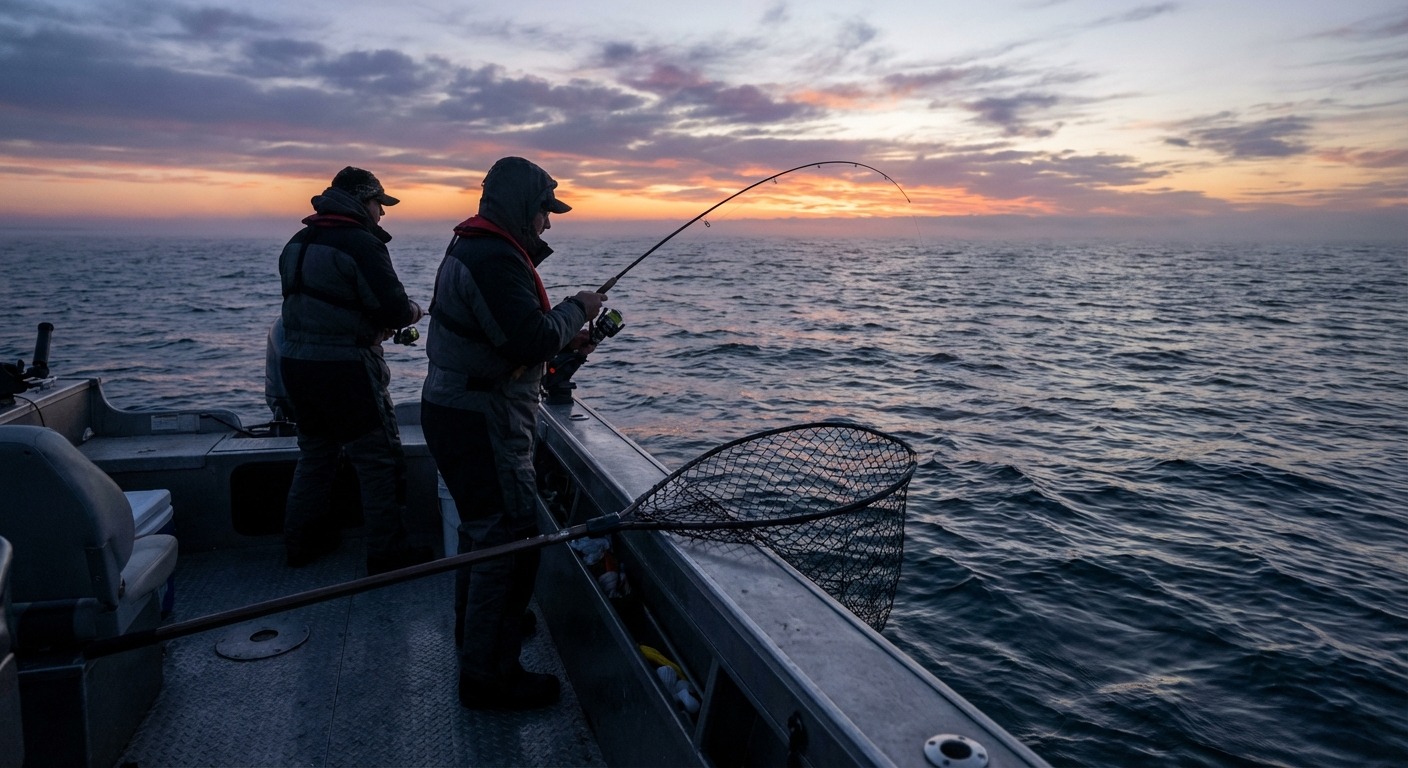
Lake Ontario's deep waters hold salmon, trout, and other game fish from spring through fall.
Best Times of Year
Spring (April – May): Brown trout are nearshore and actively feeding on baitfish concentrated along the shoreline. This is the best time for shore fishing on the lake. Steelhead are running the tributaries. Water temperatures are 38 to 45 degrees and the fish are in the upper water column. Some charters run early for browns and early Chinook, but many don't launch until late May when conditions stabilize.
Summer (June – August): The thermocline sets up and Chinook move deep. This is the prime charter season. Trolling with downriggers at 60 to 150 feet is standard. Boats run flasher-fly combos, spoons, and plugs at multiple depths. The biggest fish of the year come during this window. It's also when the lake is busiest — weekends out of popular ports feel crowded. See our fishing reports for current conditions.
Fall (September – October): The most diverse fishing of the year. Chinook stage near river mouths. Brown trout come back inshore. Steelhead begin fall runs. The weather is usually cooperative and the pressure drops off significantly from summer. If you can only make one trip a year, there's a strong argument for September.
Common Techniques
Trolling dominates Lake Ontario fishing. Charter boats run multiple rods on downriggers, planer boards, and dipsy divers, covering a range of depths simultaneously. The key is finding the right depth — which changes as the thermocline shifts — and running the right speed. Most trolling on Lake Ontario happens at 2.2 to 3 mph. Lure selection matters, but depth and speed matter more. Spoons, plugs, and flasher-fly combinations are all standard. Setback distance behind the downrigger ball can range from 20 to 100 feet and is adjusted constantly throughout the day.
Casting and shore fishing work best for brown trout in spring and fall when they're holding nearshore. Casting spoons — Little Cleos, Krocodiles, and similar — from piers, breakwalls, and shoreline access points is effective and costs nothing beyond tackle and a licence. The Port Hope pier and Cobourg harbour are popular access points.
Tributary fishing for steelhead and salmon draws anglers to rivers like the Ganaraska, Wilmot Creek, and Duffins Creek during the spring and fall runs. Techniques include float fishing with roe bags, bottom bouncing with spawn sacs, and swinging flies. The tributary fishery is a whole separate pursuit from lake fishing and has its own devoted following. Check specific river regulations — seasons, access restrictions, and methods vary by stream.
Why Charter
You can fish Lake Ontario from shore or from your own boat, and plenty of people do. But a charter puts you on fish faster, especially if you don't know the lake. A captain who's been running out of the same port for 10 or 15 years knows exactly where the thermocline breaks, where the bait is holding this week, and which depths to target first on a given wind direction. That saves hours of searching on a body of water where "searching" means burning gas at trolling speed over 7,000 square miles of lake.
The equipment matters too. A proper Lake Ontario trolling setup — downriggers, planer boards, 8 to 10 rods, electronics, a boat that handles 4-foot seas — represents a significant investment. A charter gives you access to all of that for the cost of one trip.
For anglers coming from the Ottawa Valley, Eastern Ontario, or the Bay of Quinte area, a Lake Ontario charter is worth planning around. The drive is roughly three hours from most of Eastern Ontario to the north shore ports, and the fishing is unlike anything available inland.