A charter captain who fishes Lake Ontario five or six days a week from May through October knows things you can't learn from a YouTube video or a fishing forum. Where the baitfish are stacking up this week. Whether the thermocline has shifted 20 feet since last Thursday. Which side of the harbour mouth the brown trout are holding on after a northeast blow. That knowledge is what you're paying for, and on a lake this large and changeable, it makes the difference between a good day and a blank.
What You're Getting Into
Charter boats on Lake Ontario are typically 25- to 35-foot sport fishing vessels — Grady-Whites, Tiara Yachts, Penn Yans, that class of boat. They run six to ten rod holders, two to four downriggers, planer boards, dipsy divers, sonar, and GPS. The captain and first mate handle the equipment. Your job is to sit in the fighting chair when a rod goes off and reel. On a good morning during peak Chinook season, you might get into fish within 20 minutes of clearing the harbour.
Two trip formats are standard:
- Half-day trips (4-5 hours) — Morning or afternoon, usually staying within a few miles of port. Good for families, first-timers, and anyone testing whether they get seasick on open water. Expect to target brown trout nearshore in spring and fall, or run offshore for salmon in summer. Runs $650 to $750 for up to four anglers on most boats.
- Full-day trips (8-10 hours) — The captain can run further out, fish multiple spots, and wait out slow periods. This is the trip if you're serious about trophy Chinook. You'll troll at 2 to 3 mph covering ground while the downriggers work 80 to 150 feet down. Full days run $800 to $900, sometimes more on premium boats or during peak weeks in July and August.
The fifth and sixth anglers typically add $125 to $200 per person to the base price. All tackle, bait, and fish cleaning are included. You bring your own Ontario fishing licence, food, drinks (no glass containers on most boats), and weather-appropriate clothing. Sunscreen, polarized sunglasses, and a rain jacket are non-negotiable even on sunny days — it's always cooler on open water than it is on shore.
Seasickness, Weather, and Cancellations
Lake Ontario is not the ocean, but it's not a pond either. When a southwest wind builds, the lake can stack up 4- to 6-foot waves in a hurry, and a small craft advisory means the trip is off. Most captains make the call at the dock on the morning of the trip. If the charter is cancelled for weather, you'll typically get a full refund on your deposit or the option to reschedule. If you cancel within a week or two of the trip, many captains keep the deposit. Read the specific policy when you book.
Seasickness is real and it happens to people who've been on boats before. If you're prone to motion sickness, take Dramamine or get a scopolamine patch from your doctor the day before. Start with a half-day trip to see how you handle it. Staring at your phone below deck is the fastest way to feel terrible. Keep your eyes on the horizon and stay in fresh air.
Seasonal Overview
- April – May: Brown trout are nearshore and feeding hard. Steelhead running tributaries like the Ganaraska River at Port Hope. Some charters target early Chinook, but the bite is inconsistent this early. Water is cold — 38 to 45 degrees — and the fish are in the upper water column.
- June – August: The main event. Chinook salmon push offshore and hold below the thermocline at 60 to 150 feet. This is peak charter season and the best shot at a 20+ pound fish. Coho show up as bonus catches. Lake trout are deep and steady. Weekends book out weeks in advance.
- September – October: Chinook stage at river mouths before spawning. Brown trout come back inshore. Steelhead begin fall tributary runs. The fishing is diverse, the weather is usually pleasant, and the crowds thin out. Arguably the best value time to book.
Check our fishing reports for current conditions before booking your trip.
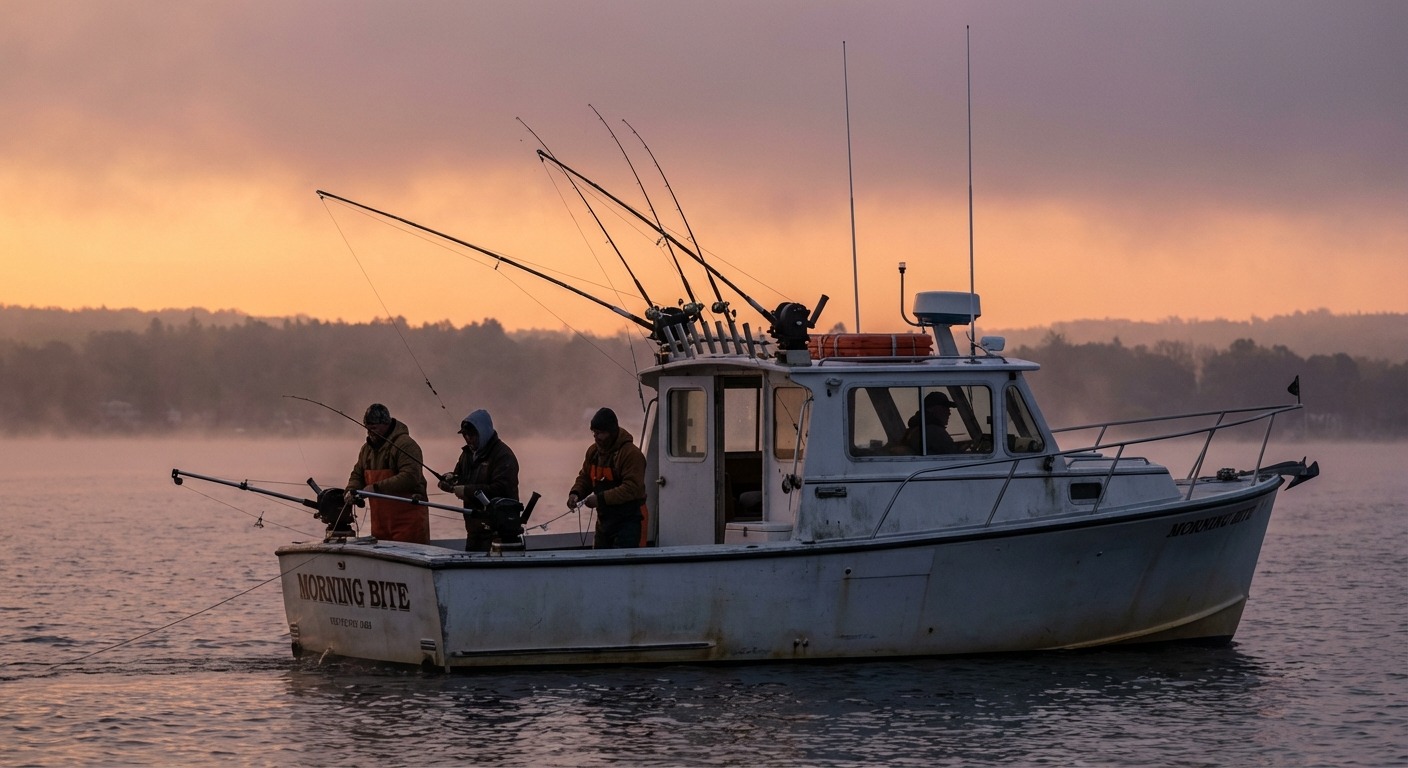
Charter boats work the waters of Lake Ontario from spring through fall.
Charter Listings
North Shore Sport Fishing
Port Hope & Cobourg area • Lake Ontario
Chinook Salmon Brown Trout Steelhead
Runs out of Port Hope harbour from May through October. The Port Hope stretch between the pier and Cobourg is some of the most consistent brown trout water on the north shore in spring. Full-day trolling for Chinook in summer, with the captain running a spread of flasher-flies and spoons at 80 to 120 feet. 15 years on this water. All tackle provided, fish cleaning included.
Bay of Quinte Guide Service
Belleville & Quinte area • Bay of Quinte / Lake Ontario
Walleye Bass Pike
The Bay of Quinte walleye fishery is a different animal from the open lake. In fall, huge numbers of walleye — including double-digit fish — migrate from Lake Ontario into the bay, staging in Adolphus Reach, Hay Bay, and around Glenora. Trolling crankbaits behind planer boards is the go-to technique, though vertical jigging works when fish are stacked in holes. Year-round guide service including winter ice fishing for walleye and pike.
Eastern Ontario River Adventures
Ottawa Valley & Eastern Ontario
Walleye Smallmouth Bass Trout
Guided trips on the Ottawa River and surrounding lakes, plus fall trips on Ottawa Valley rivers for smallmouth and brook trout. The Ottawa River holds walleye and muskie in serious numbers, though most clients book for walleye and bass. Boat and shore-based options. Good fit for anglers who want moving water instead of open lake.
Booking Tips
Peak season weekends in July and August fill up four to six weeks out on popular boats. If you have flexible dates, midweek trips are easier to book and sometimes cheaper. Groups of four are the sweet spot for most charter boats — you get enough rods in the water without feeling crowded, and the per-person cost is reasonable. Six is usually the maximum, and at that point you're paying extra per head.
When you call to book, tell the captain what you're after and be straight about your experience level. If half the group has never been on a boat, say so. A good guide will set appropriate expectations, explain what's happening with the gear, and adjust the pace instead of running a trip designed for tournament anglers. The best charters earn repeat clients by making the day enjoyable for the whole group, not just the one person who already knows what a downrigger is.